Showing posts with label News. Show all posts

Action on the stomach. ----------------------  The action of alcohol on the stomach is extremely dangerous that it becomes unable to produce...


Action on the stomach.

---------------------- 


The action of alcohol on the stomach is extremely dangerous that it becomes unable to produce the natural digestive fluid in sufficient quantity and also fails to absorb the food which it may imperfectly digest. A condition marked by the sense of nausea emptiness, prostration and distention will always be faced by an alcoholic. This results in  a loathing for food and is teased with a craving for more drink. Thus there is engendered a permanent disorder which is called dyspepsia. The disastrous forms of confirmed indigestion originate by this practice. 


How the liver gets affected.

---------------------------- 


The organic deteriorations caused by the continued use of alcohol are often of a fatal character. The organ which most frequently undergoes structural changes from alcohol, is the liver. Normally, the liver has the capacity to hold active substances in its cellular parts. In instances of poisoning by various poisonous compounds, we analyse liver as if it were the central depot of the foreign matter. It is practically the same in respect to alcohol. The liver of an alcoholic is never free from the influence of alcohol and it is too often saturated with it. The minute membranous or capsular structure of the liver gets affected, preventing proper dialysis and free secretion. The liver becomes large due to the dilatation of its vessels, the surcharge of fluid matter and the thickening of tissue. This follows contraction of membrane and shrinking of the whole  organ in its cellular parts. Then the lower parts of the alcoholic becomes dropsical owing to the obstruction offered to the returning blood by the veins. The structure of the liver may be charged with fatty cells and undergo what is technically designated 'fatty liver'. 


How the Kidneys deteriorate.

---------------------------- 


The Kidneys also suffer due to the excessive consumption of alcohol. The vessels of Kidneys  lose elasticity and power of contraction. The minute structures in them go through fatty modification. Albumin from the blood easily passes through their membranes. This results in the body losing its power as if it were being run out of blood gradually.  


Congestion of the lungs.

------------------------ 


Alcohol relaxes the vessels of the lungs easily as they are most exposed to the fluctuations of heat and cold. When subjected to the effects of a rapid variation in atmospheric temperature, they get readily congested. During severe winter seasons, the suddenly fatal congestions of lungs easily affects an alcoholic. 


Alcohol weakens the heart.

-------------------------- 


Consumption of alcohol greatly affects the heart. The quality of the membraneous structures which cover and line the heart changes and are thickened, become cartilaginous or calcareous. Then the valves lose their suppleness and what is termed valvular disorder becomes permanent.  The structure of the the coats of the great blood-vessel leading from the heart share in the same changes of structure so that the vessel loses its  elasticity and its power to feed the heart by the recoil from its distention,  after the heart, by its stroke, has filled it with blood. 


Again, the muscular structure of the heart fails owing to degenerative changes in its tissue. The elements of the muscular fibre are replaced by fatty cells or, if not so replaced, are themselves transferred into a modified muscular texture in which the power of contraction is greatly reduced. 


Those who suffer from these organic deteriorations of the central and governing organ of the circulation of the blood learn the fact so insidiously, it hardly breaks upon them until the mischief is far advanced. They are conscious of a central failure of power from slight causes such as overexertion, trouble, broken rest or too long abstinence from food. They feel what they call a 'sinking' but they know that wine or some other stimulant will at once relieve the sensation. Thus they seek to relieve it until at last they discover that the remedy fails. The jaded, overworked, faithful heart will bear no more. it has run its course and the governor of the blood-streams broken. The current either overflows into the tissues gradually damming up the courses or under some slight shock or excess of motion ceases wholly at the centre.

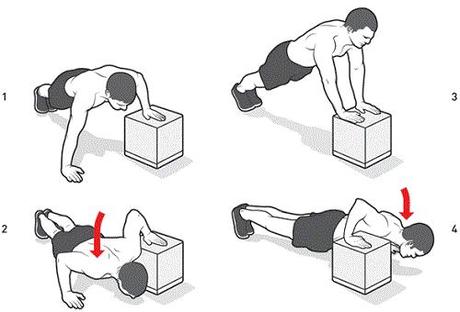
Build chest muscles as part of your bodybuilding program, and you will be taking an important step towards both looking and becoming st...


Build chest muscles as part of your bodybuilding program, and you will be taking an important step towards both looking and becoming stronger. Chest muscles are such a vital factor for a bodybuilder, in creating the right posture, so here we show you how to build chest muscles for yourself.

Step 1
You don't necessarily have to do a lot of incredibly complicated exercises to build chest muscles, they can even be built using press ups. Although their effect will be barely noticeable if you are already involved in more advanced resistance training, press ups can help give your muscles definition. Press ups are good for people who are just starting to think about building their bodies. An inclined press up is even better.

Step 2
One general piece of advice that you would do well to heed is to build chest muscles using free weights rather than a weight machine. It is sad to note that free weights are losing popularity in many gyms to the weight machines, but using free weights is still the best bet for the serious bodybuilder. Your muscles benefit from a more comprehensive workout  the weight is lifted through several different angles, and more muscles are exercised in this way, leading to a more even development.

Step 3
Treat your muscle groups separately. The muscles in your chest belong to diverse groups, and if you can work each in turn, you will gain better results than average bodybuilders who ignore this factor. The chest has an upper and lower part. Inclined dumbbell flys and inclined barbell presses are effective ways of developing the upper chest, while the lower part responds well to declined barbell bench presses and dips on the parallel bars. The chest is also divided into an inner and outer section. The inner section can be worked with standing cable crossovers, and the outer section with flat bench press and flat dumbbell flys.

Step 4
Lift right up to your limit. By far the most effective way of maximizing the effect of your training time when you build chest muscles is to lift until you simply cannot lift any more. This can be a problem if you don't take care, and you should ONLY attempt this if you can find someone prepared to spot for you. The other person is then able to grab the bar and stop it doing you any harm, or pinning you down.

Your chest muscles are very noticeable, and one of the first parts of the body that people look at when they know you're bodybuilding. You now know how to build chest muscles for yourself.


Build chest muscle fast with the techniques you will learn from this short guide. A muscular chest will make you stand out from the c...


Build chest muscle fast with the techniques you will learn from this short guide. A muscular chest will make you stand out from the crowd in a spectacular way, and this can be achieved with less time invested than many people think. Here is how to build chest muscle fast.

Tip 1
Build chest muscle fast by not ignoring half of your workout. It is a common mistake to think that only the time when you are striving to lift the weight is important, but that is simply not true. The negative lifting, or release phase can help you speed up your development if you use it properly. Weight lifters at all levels of experience make the common mistake of allowing gravity to assist them. Avoid falling into this trap, and the extra exertion will add greatly to the gains you make from your lifting. This is the most effective way to build chest muscles fast.

Tip 2
Use dumbbells, not barbells. Although working with barbells will still produce positive results, these will not be optimum, because you should be working each pectoral muscle separately. The human body is never exactly the same on both sides, so when you lift barbells you are really allowing the stronger side of your body to compensate for the weaker side. If you use a separate weight for each side, you can tailor the weight to each side's needs, and produce far better results.

Tip 3
Incorporate pull ups into your routine. Chin ups weren't designed to build your chest, but when they are performed with a wide grip, they can be very effective in building the sides of your abdomen and the very outside of your pecs. Following your mainstream chest press exercises, do a few chin ups, and you will notice the difference they make in helping you to build chest muscle fast. There are also side benefits to this work, as your back and shoulders are developed in conjunction with your chest.

Tip 4
Build chest muscle fast by making use of combo sets. As soon as you have finished on exercise, whatever that may be, don't wait to have a rest period, move straight to the next exercise – this can be effective with bench presses and then dips, or even bench presses and wide-grip pull ups – with the extra work that your muscles will be doing, you can make some spectacular progress in a short time.

This guide has given you some important basics in learning how to build chest muscle fast. Apply them and you can benefit handsomely! Check out the links below for some extra resources.


Build arm muscle is one of the most common goals of aspiring bodybuilders. There is no shortage of advice, either in books or on the in...


Build arm muscle is one of the most common goals of aspiring bodybuilders. There is no shortage of advice, either in books or on the internet, telling you how to do this. Here in this article, we will show you how to genuinely build arm muscle.

Tip 1
Train sensibly. Many people who are trying to build arm muscle make the mistake of over training. It is easily done, as the arms are used in so many different bodybuilding disciplines. One good way of ensuring you don't over stress your arms is to leave them until the very end of your workout routine. 

Tip 2
If you want to build arm muscle effectively, you will want every single rep you perform to be as effective as possible. The goal is to get as many  muscle fibers involved as you can. If you can bring as many muscle fibers as you can into play, you will not only develop stronger muscles, they will be more even and have a better tone.

Tip 3
The correct extension of the weight is critical, but control is equally important, throughout the whole of the lift. The strongest determining factor here is the weight itself, so don't defeat yourself by using a weight which is too heavy. In order to make your exercises as effective as you can, make sure the lift is executed as quickly as possible, while you still have the weight under control. As you release the weight, try to do so as slowly as comfortably possible. If you can make this downward phase take at least two seconds, you will be burning a lot more fat.

Tip 4
One point which is often overlooked by beginning arm muscle builders is that there is more than one group of muscles, and you need to work them in a balanced way to achieve optimum results. So many bodybuilders who have not taken enough time to learn the craft properly concentrate solely on biceps, which will lead to an unnatural and uneven development, and may even lead to injury. Make sure you learn how to develop your triceps in harmony with your biceps, for optimum results. Don't risk the pain of a torn ligament!

If you have been struggling to gain results from your arm muscle exercises, take the advice of this article on board, and start seeing some real benefits. Check out the links below to discover some more valuable resources.


For many years, scholars have recognized the link between a good breakfast and improved student behavior and academic performance. Bost...


For many years, scholars have recognized the link between a good breakfast and improved student behavior and academic performance. Boston schools see breakfast as their first tool of success. 

In 2000, the Boston schools partnered with the Massachusetts General Hospital to conduct a study on the impact of the federal School Breakfast Program in 16 of their elementary schools. Researchers found that a simple breakfast of milk, juice and cereal provides a fourth of the Recommended Daily Allowance (RDA) of key nutrients needed by growing children. Breakfast reduces hunger in the classroom and improves the overall nutrition of the students. They found that student behavior and grades improved, especially in mathematics. Students were able to spend more time on tasks and were more creative. Attendance improved. Students demonstrated better concentration facilities and improved emotional functioning. Trips to the nurse’s office were drastically reduced.

Breakfast is by far the least expensive program for improving academic achievement, yet less than half the children eligible for the free or reduced price meals participate nationwide. One major obstacle is perception — breakfast programs are viewed as programs for the “poor kids”, a label many students wish to avoid. The other major obstacle is timing. Most schools across the country serve breakfast before the start of school — children who arrive late due to tight morning schedules or on buses that are late, miss breakfast.

Many of the Boston schools have implemented innovative strategies to overcome the obstacles of perception and timing: 

• Nearly 80 elementary schools now offer a universal breakfast — all children eat together for free. The “poor kid” stigma has been eliminated.
• Participating Boston schools make breakfast a normal and expected part of the morning schedule — no different than taking attendance. 
• Boston schools serve breakfast in a variety of ways, using the method that works best for each individual school’s culture. Methods range from serving cold or hot food in the classroom from a cooler or thermal pack; grab and go, brown bag breakfasts; sending students to the cafeteria after attendance; or a combination of these approaches.
• Involving the children makes the program more successful. Children rotating being in charge of food delivery to the classroom, after-breakfast trash removal, and returning leftovers to the cafeteria instills pride and responsibility. They become part of the program, not just participants.

The Boston schools have been recognized for their efforts in the School Breakfast Program. Project Bread, the state’s leading anti-hunger organization and Boston schools partner in the School Breakfast Program, awards Boston schools that have achieved an 80 percent or greater student participation — the point at which the breakfast program pays for itself with federal dollars. 

In 2002, Project Bread recognized 10 elementary schools with the School Breakfast Excellence Award. Each award is $1,000 that the school’s principal can use for any school-related expense.

The Boston schools have found that when their educators make it a priority and part of the daily schedule, it is more acceptable to the students and has a better chance to succeed. Breakfast is such an inexpensive way for Boston schools to achieve substantial academic results — especially in the children who need it the most.

Bodybuilding workouts are the most important part of your bodybuilding endeavors, but many people have not done enough research to full...


Bodybuilding workouts are the most important part of your bodybuilding endeavors, but many people have not done enough research to fully understand, and get the best from, their workouts. Here in this article we will show you how to maximise the results from your bodybuilding workouts.

Step 1
Put some real effort into it. Nothing important is ever achieved in this world without some effort, and if you are approaching bodybuilding in a half hearted manner, then you will only get half hearted results. Any results you will see will be far less than you would have seen if you had been dedicated to the task. If you really want the muscles and body you are working for, why not put in a full effort?

Step 2
Maintain your enthusiasm. One of the most important factors in keeping the right level of enthusiasm for your training is to time your gym visits judiciously. All gyms have some competition to use the equipment, and if you cannot get access to it, you may end up not being able to perform some of your most important routines. This is not only frustrating, it can lead to setbacks in your progress. If you can plan your gym visits for quieter times of day, such as morning opening, or early afternoon, that will help.

Step 3
Maintain your energy level.. Someone who is muscular is not necessarily fit, so you should work at being both. If your gym has a treadmill or an exercise bicycle, these provide the ideal opportunity to do some aerobic exercise in the middle of your bodybuilding exercises. Although this will add a bit of time to your overall workout, it will increase your intensity.

Step 4
Make sure each exercise is performed correctly. To maximise the effect of your bodybuilding workouts, they need to be performed as they are written in the textbook. Try to keep your back still while you are doing barbell curls. A large amount of your time will go to waste if you are not maintaining your effectiveness with correct technique. Get this part right, and you will gain far better results for your time.

Bodybuilding workouts need to be tailored to the needs of the individual, but the hints in this article should provide you with something to work on during your next gym visit.


Bodybuilding and bulking up muscle is something which appeals to large numbers of people. Much has been written about it in books and th...


Bodybuilding and bulking up muscle is something which appeals to large numbers of people. Much has been written about it in books and the media, and we are now seeing large numbers of instructional videos and DVDs being produced. You need to know what you are doing, however, so here are some tips for bodybuilding and bulking up.

Tip 1
Bodybuilding, bulking up, whichever way you want to put it, can be done in your home, but you will probably achieve better results by training in a proper gym, with free weights. When you make the effort to travel to a gym, it helps prepare you mentally for the workout, and the professional surroundings will stimulate you to give your best effort. Gym work is usually far more effective then home work.

Tip 2
Don't overlook cardiovascular work. Bodybuilding and bulking up will no doubt take up much of your time and energy, but they will be so much more effective if they are done from a solid base of aerobic fitness. Cardiovascular work will vastly improve your muscle tone, as well as your general health. Because of this, you will be increasing your chances of  living longer, as the one muscle which you cannot afford to be weak is your heart.

Tip 3
Make good use of nutrition bars. Regular intake of the nutrients needed for  bodybuilding or bulking up is vital, yet with the pressures of modern life there are bound to be times where meals are missed. This will doubtless impair your progress, and could even stop your muscle growth. Nutrition bars will help you fill that gap. The only danger of having such a convenient source of nutrition is over-reliance. Nutrition bars are not as nutritionally rich as a proper meal, so only use them when necessary.

Tip 4
Another useful bodybuilding/bulking up tip is to get into some creatine. The entire subject of creatine intake is very involved, and would take more than just an article to explain. Red meat is the only natural source of creatine, and it is an abundant supplier of energy to the muscles. Increased creatine consumption should mean you can work your body harder, and achieve greater muscle growth for the same amount of effort. Quite an impressive achievement for one simple supplement.

If bodybuilding/bulking up is something you want to do, the tips here will get you off to a great start.


In the learning process, there are determinants if the students do really learn as or not. Factors such as the ability and effectiven...


In the learning process, there are determinants if the students do really learn as or not. Factors such as the ability and effectiveness of the instructor, the method of instruction, the attentiveness of students… But did you know that the furniture arrangement in the classroom affects learning too? Yes it does.

A classroom is called as the learning environment of both teachers and students. The former has the control over the classroom setting while the latter are in one way, is controlled by classroom environment and its elements. According to recent studies, teachers hold dominion over their classroom environment- they even make it personalized in most cases. Teachers believe that through this, they are able to control the social interaction among students. If the classroom is being set in such a way that students would be able to feel free and comfortable, the teacher could ask them or encourage them to participate in much easier means.

Sensory stimulation is another effect of a good classroom setting. For children, it is easier to learn in a very appealing classroom- like the elements of the things that would appeal to the senses are there. Pictures, colors, sound, and so forth. The arrangement of furniture affects space allocation and space allocation has effects to the learning atmosphere. If the classroom looks narrow and small for students, they feel restricted and they do not interact well. On the other hand, if a classroom provides adequate space, students feel that there is space for interaction.
   
“Many teachers and administrators tend to focus on pedagogical and interpersonal issues, ignoring the physical-spatial context in which the teaching-learning process occurs.” (Loughlin & Suina, 1982; Weinstein, 1981). As observed, this is indeed true. What is a class of seemingly smart students when a classroom seems too dark for interaction?
In modern times, technology is being integrated to the curricula. On the other hand, if the classroom setting is not improved in such a way that it will not create an atmosphere of participation, it is useless.

By tradition, classroom arrangements come in two patterns: the territorial and the functional arrangements. In a territorial set-up, desks are arranged by ownership while in the functional, they are arranged according to the tasks in an activity. Both may be effective as long as external factors are considered well.


It is surprising to know that furniture arrangement affects learning- but indeed, it is true.

The Bill and Melinda Gates Foundation made an investment of $21 million in Chicago Schools to strengthen the students’ preparation fo...


The Bill and Melinda Gates Foundation made an investment of $21 million in Chicago Schools to strengthen the students’ preparation for college.  The gift funds the Chicago High School Redesign Initiative, which will provide for major improvements in high school curriculum and instruction to ensure the students are prepared to succeed in college and career.  

Under this initiative, the coursework structure and teaching methods of 50 high schools will be transformed. The goal is to give all students access to a high quality education, while keeping them motivated throughout their high school years. Courses will be offered to capture student interest, while providing them with the knowledge needed to graduate and go on to college or another form of post-high school education.  The initiative also will provide teachers who are well prepared and able to inspire these young people with a love of learning and desire to excel.

Like many other large urban districts, traditional high schools in the Chicago schools struggle to provide challenging and relevant coursework with the personalized instruction necessary for all students.  Currently in the Chicago schools, only 47 percent of graduates go on to college, while 46 percent of 9th graders dropout before graduation. Many of those who continue on to college find they need remedial classes to cover content they should have mastered in high school.

The Gates Foundation chose Chicago schools to be one of the first big cities to meet this challenge for today’s youth.  The Chicago schools were eager to partner in this endeavor. 

Initially, Chicago schools will implement the transformation plan with 14 high schools, starting with the 9th grade. The redesign initiative then expands to other grades and to 36 additional high schools over the next three years.  The initial 14 schools are:

• Bowen Environmental Studies Team (BEST)
• Carver Military Academy
• Chicago Military Academy at Bronzeville
• Clark Academic Prep High School
• Crane High School
• Dunbar Vocational High School
• Dyett High School
• Fenger Academy High School
• John Hope College Preparatory High School
• Kenwood Academy
• Wendell Phillips High School
• School of the Arts, South Shore Campus
• Mose Vines Preparatory Academy at Orr Campus
• George Washington High School

The goals of the broad redesign initiative are to improve classroom instruction, provide more options and opportunities for students and their parents, and to make Chicago schools performance more accountable to parents and the community.  The five most significant challenges to be addressed by the Chicago schools are strengthening the curriculum, increasing rigor and relevance of coursework, adding depth to course content, improving professional development, and providing better school-based support. 

The curriculum areas of focus are English, mathematics and science with teachers providing more instructional support in these subjects. A new school accountability tool for parents is the scorecard. The card tracks a school’s performance in areas, such as graduation rate, school climate, teacher information, and student achievement.  One area of improvement of benefit to teachers, students and parents, alike, is the recruitment of and professional support for high quality principals for the Chicago schools.

The initiative is one of the most thoughtful and comprehensive approaches to high school reform in the nation with its aim of raising expectations and preparing every student for success after high school.

The initiative gives Chicago schools the potential to significantly impact the quality of education students receive in high school and put them on the right track to succeed after graduation.


It is an excellent idea for schools to ask their students to rate teachers because of the benefits for both the teachers and ...


It is an excellent idea for schools to ask their students to rate teachers because of the benefits for both the teachers and the students. Teachers will be able to improve their teaching styles and strategies and students will be able to become more positively involved in school and their studies.


On one hand, teachers who are evaluated can receive concrete advice from their very students on how to improve their teaching skills that would make it more responsive to the needs of the students.

  • Teachers will learn about their own weaknesses and work harder to improve in those areas. To be a teacher is not an assurance that one is perfect when it comes to doing the profession. Evaluation will help instructors by reminding them that they must leave room for improvements.

  • Hearing about what the students enjoy will encourage teachers tom prepare more interesting and interactive lesson plans. The preparation must be done in accordance with what kind of students a teacher has.

  • Teachers could gain ideas for classroom activities from student suggestions. Nobody knows what they want but the students themselves. Their suggestions must be taken very well.


  • Teachers would polish themselves to be more competitive. Thus, paving the way to a better educational system in every country. And, we know the world needs it so much.


On the other hand, students will become more interested and involved in their education.

  • Students will think seriously about the quality of education they are receiving while writing evaluations. Some of students are passive but when they will be given the chance to evaluate, it will be time for them to realize the value of their studies- and the pay they give for education.

  • Students will have the opportunity to play an active role in their education by expressing their concerns. Education is endless but necessary- it is something to be valued.


  • They will be awakening to the fact that they need quality teachers and bear in mind that if they become professionals they have to pursue for excellence.

With declining enrollment and building space for tens of thousands more students than they have enrolled, the Baltimore schools annou...


With declining enrollment and building space for tens of thousands more students than they have enrolled, the Baltimore schools announced last December their restructuring plans to close several elementary, middle and high schools with others becoming combined K-8 schools.

The Baltimore schools held a series of community meetings, where they released a list of possible options they were considering. The options included schools to close, some to renovate, and where to build new ones. The options also were listed at their web site, where parents and community voted on which options they thought were best.

All options would close several Baltimore schools middle schools with consistently low test scores and high rates of violence. Some of these targeted schools are on the state’s “persistently dangerous” schools list, while others are being watched closely for inclusion to the list. The troubled Thurgood Marshall High School, site of a shooting in the 2004-2005 school year, also is included in all options. A new building will replace the current middle school, located at the same site, and be a K-8 school.

The Baltimore schools are dealing with deteriorating buildings, declining enrollment, and state demands that they operate the school system more efficiently. The Baltimore schools’ chief executive officer Bonnie S. Copeland stated that community committees, which used public input gathered earlier last fall, developed the options.

Copeland believed that much of the community shared her vision to expand the K-8 schools, which have been outperforming the traditional middle schools. Many parents, as well as community activist groups, were outraged and vehemently opposed several proposed options and school closings.

Many do not wish to see K-8 schools, unhappy with older children who set bad examples being mixed in with younger children. They believe the low test scores of several middle schools is more complex than just integrating the students with the elementary schools. Additionally, some high-performing schools could be closed, due to building conditions and capacity.

Many parents and activists believe it would be cheaper to renovate existing schools, rather than build new ones. David Lever, executive director of Maryland’s Public School Construction Program, backs this belief.

In March 2006, the Baltimore schools reacted to public pressure and released a substantially revised plan, stating that they took to heart the public’s concerns. The changes did little to appease the opponents of the plan, leaving the Baltimore schools caught between the state demanding a school closings plan and the parents and community activists.

After 85 public meetings on the topic and more than 10,000 participants, the Baltimore schools board voted at the end of March to close 16 Baltimore schools over the next two years. They also approved a 10-year, $2.7 billion plan to build 27 new Baltimore schools, moving thousands of children from middle schools to pre kindergarten through eighth grade.

It’s that time of year when mom and dad look for ways to improve their child’s academic standing during the upcoming scholastic year ...


It’s that time of year when mom and dad look for ways to improve their child’s academic standing during the upcoming scholastic year or, at least, they should be. 

There are many options to weigh in such as: new school clothes, school supplies, peer pressure, after school care, homework, league sports, and transportation.

This is time of year for great changes, but here are two changes that will impact your child for life and require a bit of work and commitment on your part.

Expose your child or children to some kind of faith: The faith of your parents, your faith, your spouse’s faith, or the faith that you left behind.  Set an example and start attending a temple, mosque, shrine, or church right now.

If your children have nothing to believe in, will they have a happy, productive, and successful life?  You already know the answer to the question, and it requires work to teach children.  Anybody can let years go by, and teach their children nothing.

Find a hobby that suits your child and have them stick to it.  Oh no, more work!  Yes, it is, but your child will benefit immensely from this decision.

It could be dance, Yoga, martial arts, music, gymnastics, boy scouts, girl scouts, or something else, but whatever it is, your child should initially like it.  At that point have them make a commitment and don’t allow them to quit unless there is a solid reason.

If a coach, teacher, or tutor is abusive, that’s an understandable reason to leave, but you can always find another coach.  In truth, if you allow laziness, in your child, you will receive it.  Children will usually follow the path of least resistance, but they crave structure.

My experience has been: Children constantly turn their attitudes around, for the better, in martial arts and Yoga classes.  Due to the fact, that there is a formal set of existing rules and a code of conduct.

Don’t allow them to sit in a corner with a video game and a television, except for rare occasions.  There are too many good things going on in the “real world” that need their attention.

These two changes will instill fortitude, perseverance, and goal-setting skills that last a lifetime.  The rewards can be endless, for your whole family.

If you have children, late July, August and early September represents more than summer ending, cooler weather and fall foliage.  Sch...


If you have children, late July, August and early September represents more than summer ending, cooler weather and fall foliage.  School begins once again for millions of kids across the country.  Getting your child prepared, regardless of whether they are in Kindergarten or a senior in high school, is a must.  Here are some tips to make the transition from several weeks of summer fun to school days and homework easier.

Children in Kindergarten – 5th grade

1. About a week before school starts, have your children go to bed at the time they will when school begins.  Set their alarm or wake them up early.  It’s difficult for some kids to adjust to going to bed and getting up earlier after having an entire summer of sleeping in or staying up late.  Many young children need to be on a schedule and preparing a week or so earlier will pay off, especially if you have a night owl or late sleeper.

2. If you have a school supply list (many school districts post them on their website or hand them out the last day of school), buy the supplies early.  For the child who is not organized, this is a good way to begin the school year off on the right foot.  Label everything and get the backpacks ready the night before school starts.  Buy some extra supplies to keep at home if your child is one to lose or forget their pencils or markers at school.  They will probably need some basic supplies for homework time.  Nothing is more frustrating than sitting down to do homework and discovering the basics are missing.

3. If you have a Kindergartener, walk to school two or three days before school begins (or drive if they take a bus or you will be driving them).  This helps acquaint them with what they will actually be doing that first day and can work wonders for alleviating the first-day jitters.  If your child is especially anxious, ask if you can let them visit their new classroom for five or ten minutes the day before school starts.  Many principals will let the Kindergarteners come to the campus prior to school starting.

Middle School

1. Many sixth graders will be attending a new school for their middle school years.  Oftentimes, the campus is much bigger and can be intimidating.  Of course pre-teens may not admit they are nervous, but most parents are.  Suggest a bike ride over to the school sometime during August just to look around.  Many middle schools conduct orientation anyway a couple of days before school actually begins, but an extra trip without all of their peers might be worthwhile.  

2. Just as in elementary school, it is important, if not more so in middle school, to have all the school supplies ready, especially an organizer.  Some schools make it mandatory for the students to purchase an organizer directly from the school. Get in the habit from day one of checking it and being sure homework assignments are recorded.  Visit the school website and see if homework and grades will be posted on the site.  This is an excellent way to stay involved with your child’s progress throughout the year.

3. If your student struggles with the basics; math or language arts, consider hiring a tutor for some review sessions before and during the first semester. Also, it is quite common in middle school for students who are excelling to be moved to Honors classes sometime during the year.  Being in an accelerated class is a good way to prepare a student for Advanced Placement (AP) classes in high school, which count as college credit.


HIGH SCHOOL

1. Find out when the PSAT and SAT exams will take place.  If your student is not a good test taker, consider enrolling them in a test prep class.  As colleges become more and more competitive, test scores make a difference.  One can take the exam more than once if they are not happy with the score, so plan ahead and register early.

2. Stay tuned in to your student’s school and social schedule.  There is a tremendous amount of freedom in high school and even the most academically gifted students can be distracted by all of the things that are associated with the teenage years.  Establish a curfew for school nights and limit the amount of time that is spent at a part-time job or involved in sports, especially if time management and study skills are not your child’s forte. 

3. If your son or daughter is college-bound, start doing your research and be sure to attend the college nights that many high schools sponsor.  Know what is expected on college applications.  It is no longer a simple process like it was for the baby boomer generation.   Test scores, a formal essay, volunteer hours, and class selection in high school are all important factors in getting into college.  Take advantage of the many companies that exist today solely for the purpose of assisting you and your student select the right college for them.

Regardless of the age and grade of your children, stay involved.  Volunteering on any level, whether it be reading stories to your elementary aged child’s second grade class, helping in the computer lab in middle school, or being on a committee for peer counseling in high school, it is important to know what is happening at the place your children spend a large part of their week.  With so many parents working, many Parent Teacher Associations have their meetings in the evening, so more parents can attend.  There are activities that need volunteers that do not involve daytime hours such as calling parents in the evening for a fundraiser or helping with a weekend car wash at high school.

These tips can help your children get back to school the right way and prepare them for a year of learning and fun.  For additional articles on raising kids, starting a business, or educational issues go to http://www.hometutoringbusiness.com.

There really are few ways to compare a two-year education with a four-year education that would be fair to either degree program. ...


There really are few ways to compare a two-year education with a four-year education that would be fair to either degree program. The truth of the matter is that both are excellent for certain things while both also offer serious limitations. When it comes to pros and cons they both have their own set of both that make excellent food for thoughts.

Two-Year Education

Pros

When it comes to a two-year college program there are several things you should consider in its favor before you take the plunge. First of all, you should keep in mind that the degree or certification at the end of your studies doesn't necessarily indicate the end of your education. Two-year degrees are excellent starting points for four-year degrees but also allow you the option to venture out into the workplace with your own skills and knowledge that will allow you greater earning potential than a high school diploma. You will also have the benefit of entering the work place much sooner with an associate's degree than with a bachelor's degree. Most importantly for many who are limited by budgets, two-year colleges offer an affordable alternative for an education or even the first two years of your education.

Cons

The biggest cons that most people find when it comes to getting a two-year degree is the growing competition for limited jobs. In fact, it is difficult to remain competitive in any industry when there are more and more entering the work force with bachelor's degrees. It is simply more difficult to maintain a competitive edge with only a two-year degree though it is not impossible. The other obvious con when it comes to two-year college degrees is that fact that some positions will not even consider anyone with less than a four-year degree. This means that you aren't even in the running required to worry about competition.

Four-Year Degrees

Pros

A bachelor's degree will earn you far greater earning potential in your lifetime than a high school education without a doubt. It will also place you in a position of serious competition within your chosen field or industry. This means that you will often be given preference when seeking jobs over those who do not have degrees or those with lesser degrees regardless of experience. There is also not enough that can be said about the personal confidence that goes along with earning your degree. You will find that you are much more confident on both a personal and a professional level once you've earned your bachelor's degree.

Cons

The single largest con associated with a bachelor's degree is the expense. Both in terms of time and money bachelor's degrees exact a price. You should be certain that you are both willing and able to pay that price before setting out to get your degree.

Regardless of whether a two-year degree or a four-year degree is in your personal best interest at the moment neither are a waste of time or effort. I hope that you will eventually seek a four-year degree, as this will give you a competitive edge in business, however, even the smallest improvement in your education level can mean big changes over the course of your lifetime. Sometimes it helps to improve your education in steps. Take one class at a time until you have your associate's degree then repeat until you have your bachelor's degree. Good luck!